




ב"ה
Mitzvot & Jewish Customs
75 items in this section
Sort By:

This arrangement is actually a practical solution to a specific requirement in Jewish law.
|

The Secret Code That Outsmarted the Romans
|

The custom of visiting the graves of the righteous—particularly in times of hardship—is deeply embedded in Jewish tradition, dating back to our earliest ancestors.
|

While some mark the 26th of Sivan as the yahrzeit of the great Talmudic sage Yonatan ben Uziel, there is little evidence to support this.
|
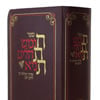
Everything you need to know about the daily practice of studying three Jewish texts: Chumash, Tehillim, and Tanya.
|

Could it be true, I wondered, that there really is no mitzvah to help people? I tried to consider how what I already knew (or thought I knew) fit in with the speaker’s narrative.
|

Would it be harmful to teach my child to believe in the tooth fairy?
|

We often associate
piercings with tattoos, and we may wonder if they are equally forbidden.
|

In Jewish tradition, we respect each other’s privacy and dignity and protect our own by maintaining clear boundaries.
|
We create a direct connection between recognizing the true source of the bread and enjoying it.
|

Are “rav” and “rabbi” not synonyms?
And why do I need a personal rav?
Isn’t it one Torah for everyone?
|

In time, it came to refer to any group of scholars who were supported by the community.
|
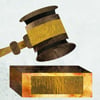
A "house of law," the beit din is a Jewish court. It settles monetary disputes, oversees kosher production, handles marriage and divorce, and offers Torah guidance.
|
|
The Torah Prohibition Against Mixing Seeds or Species
The Torah forbids combining certain species of animals and plants in specific ways.
|
9 steps to writing and delivering the ultimate Torah teaching
The practice of sharing a Torah thought is part of the fabric of Jewish life and an integral aspect of lifecycle events, communal gatherings, and even family get-togethers.
|
Derech eretz is so important that there is a minor tractate dedicated to the topic.
|

I have a friend who, whenever he says that he will or will not do something, always adds the disclaimer bli neder (lit. “without an oath”). What’s up with that?
|

Why is there a ritual way of slaughtering and preparing all kosher animals except for fish?
|

Would it not be better for me to keep this mitzvah between me and G‑d?
|

I have a strong desire to broaden my knowledge of my heritage, but I currently feel inadequate about pursuing these studies. Although I know how to read Hebrew, I do not understand a word of it. Should learning the language of the Torah not be my first priority?
|

Why the obsession with such insignificant details as how many ounces of matza do I eat, which spoon did I use for milk and which for meat, what is the right way to tie my shoelaces? It seems to me that this misses the bigger picture by focusing on minutiae
|

I find it interesting that when we do have an explanation for a particular custom, there's usually more than one reason. And when we don't have a reason, we nevertheless continue with the tradition...
|
When you use something physical, it gets “used up” and diminished. With spiritual things, the very opposite is the case
|
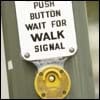
Rabbi, do you honestly believe that pressing a button to cross the road is considered doing work on the Sabbath? It doesn't seem so strenuous to me...
|

I like the idea of a day of rest. But why should I start my day of rest at a prayer service? Aren't there better ways to start my weekend?
|

The Talmud tells us that there are 613 commandments in the Torah; 248 Positive Commandments (do's) and 365 Negative Commandments (do not's). Here's a complete list --as compiled by Maimonides.
|

It would be absurd to think that G-d gave us the Torah as a sort of bandage for His mistakes. "Oops! I didn't mean to put those nasty animals there! People might eat them! What do I do now?"
|

Why do Jews give the poor old pig such a hard time?
|

A closer look at a 3,300 year-old environmental protecttion law
|
The garment surrounds our body; the fringes hang off it. They represent the two aspects of G-d’s being: His true self that is totally beyond our grasp, and the tiny fraction of His being we can experience.
|

I have often wondered why many religious Jews have long hairy beards. Is this, like the kipah, a means of identifying oneself as a Jew or do the beards serve some other purpose?
|
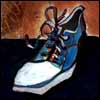
I saw the craziest thing in the Code of Jewish Law. It tells you how to tie your shoes!
|
"What should I wear today - the black jacket or the blue?" How boring! Where's the individuality? Where's the freedom of expression? Do you people have no originality at all?
|

I am a Muslim. In my religion, wine is forbidden. Does Judaism honestly believe that such a sensual indulgence can be considered holy?
|

Why do Jewish holidays begin at nightfall? For example, Purim starts this Monday night, and is over Tuesday night, and that is considered one day.
|
If the Torah commands the Jewish people to wage an eternal war against the nation of Amalek, why aren’t you seeking out Amalekites to kill?
|

I go jogging every Friday afternoon and often pass your synagogue. I see you are getting some nice crowds. To be honest I don't see why people go to services every single Shabbat.
|
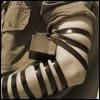
I know that we put these black boxes on our head and our arm next to our heart, but other than that, I have no idea what they are about. Do you have an explanation for what Tefillin are?
|

The art of baby naming
Choosing a name is a big deal. A person’s name is not a mere label; it expresses the essence of its bearer . . .
|
|

When did Jews start celebrating Bar-Mitzvahs?
|

That last bear hug is different than its predecessors. Whereas till now the cuddles and hugs assisted in cementing the relationship, the final embrace takes it one step further...
|
This prohibition applies to all tattoos besides those made for medical purposes . . .
|

When You’ve Lost Your Motivation....
When our behavior is a consequence of intellectual understanding or a strong emotional feeling, it is not completely selfless. It is "I" that understands and "me" that feels.
|
I can see the experiential quality of it all: an ancient temple with heavenly music and mystical song; priests in flowing robes deep in meditation; mesmerizing, choreographed ritual. But why the barbecue?
|

The problem with the word “temple” is that Indiana Jones got to it.
|

What is Judaism’s take on a godfather or godmother?
My brother told me when his daughter was born that a godparent was not needed. Is that true?
|

Why do we not try to make the synagogue candelabrums more like the one in the Temple? After all, isn’t the synagogue supposed to be a miniature Temple?
|
Does 613, the number of commandments G‑d gave the Jews, have any symbolic meaning?
|

Today I encountered a most bizarre situation. I passed by a synagogue and someone asked me to join the prayer service. Right before the prayer service began, a person standing next to me pointed his finger at each person in the room and muttered some words under his breath. Was this some kind of blessing, curse, or something else?
|

During the recent Jewish holidays, I noticed that when the priestly blessing, the birkat kohanim, is being sung, the congregation says a prayer to “transform” their bad dreams into good dreams. Why pray for them specifically during the holidays?
|

My friend is having issues with his digestive system. I have always nudged him to grow in his spiritual life. Now he is asking me if this could be connected to his not fulfilling G‑d’s commandments to their fullest. What can I tell him?
|

It was nice eating at your house this past Shabbat. But I noticed that your walls are covered with bookshelves. Why do you have so many books?
|
The basis for the commandment to honor our parents might be seen as rational and reasonable, since it would only seem right to acknowledge all that our parents gave us.
|

I wronged another person. How do I do “Teshuvah”?
I have been doing some introspection and realize that I have done things in my life that were wrong, and I have harmed other people. How can I face myself after having done these things? And is it possible do rectify the past?
|

Why do we wish blessings or health to someone who sneezes?
|

|

The Senate just voted to extend Daylight Saving time right through the winter. What does this mean for Torah-observant Jews?
|
|
At times, the Jews in Israel are one portion ahead of the Jews in the rest of the world. How does this happen?
|

Mazal tov literally means “good luck,” but Jews use it pretty much the same way that English-speakers use the word “congratulations.”
|
A list of the Thirteen Principles of the Jewish faith, as penned by Maimonides, along with their biblical sources.
|

And other interesting Q&A from our Chabad.org inbox (Installment #2)
|

My sons both have the same portion. Can they read it together?
|




Sort By:
